Publication: Public audit in Scotland: Interim evaluation

What is Public audit in Scotland?
Public audit in Scotland is the shared statement of purpose between the Auditor General, the Accounts Commission and Audit Scotland. Published in 2023, it sets out our vision and mission, and the outcomes we intend to achieve for Scotland’s people.
What is this evaluation?
We are at the halfway point of Public audit in Scotland’s five-year lifespan. This mid-term evaluation looks at our progress so far in achieving our intended outcomes, and in driving our mission and vision. It also considers how well we record and monitor our performance, and where we can improve. The evaluation is supported with case studies throughout.
What happens next?
The interim evaluation sets out recommendations for Audit Scotland to improve both its audit work and its evaluation approach. In 2027 we will carry out a final evaluation of progress and report publicly.

Vision
Public money is well spent to meet the needs of Scotland’s people.

Mission
Provide clear, independent and objective assurance on how effectively public money is being managed and spent.

Outcomes
By 2028 we want to achieve measurable change in the following areas:
Public services in Scotland work better together to target resources more effectively.
Financial planning and management are more effective across Scotland’s public services.
Public bodies deliver clearer and more transparent reporting.
Our recommendations have a positive impact for people in Scotland.
Public audit is having an impact, but pace of change is slow
Our work to drive improvements at public bodies is supporting changes and improvements within public bodies and in public services. Of the 697 audit recommendations evaluated, 94 per cent were accepted by audited bodies. This indicates strong buy-in from those bodies and support for improvement.
However, while our recommendations are overwhelmingly accepted, implementation can be slow. It is often delayed due to complexity and the competing demands on public bodies. Many recommendations have also not had timebound targets.
Recommendation
The evaluation recommends that auditors follow our new guidance on timebound recommendations. We also need to more consistently produce supplementary outputs across sectors and audit, and better monitor stakeholder engagement with such tools and guidance we provide.
Stakeholder relationships are effective, feedback is positive but fragmented
The evaluation finds a picture of collaborative and respectful engagement between auditors, audited bodies and wider stakeholders. This contributes to smoother audits and better recommendations. Stakeholder feedback is positive but fragmented: there is a need for more coordinated and comprehensive stakeholder feedback approaches and tools.
Recommendation
Areas for improvement included improving training on relationship building. We should also improve how we coordinate and collate stakeholder feedback to address gaps and provide a more coherent picture across all of our stakeholders.
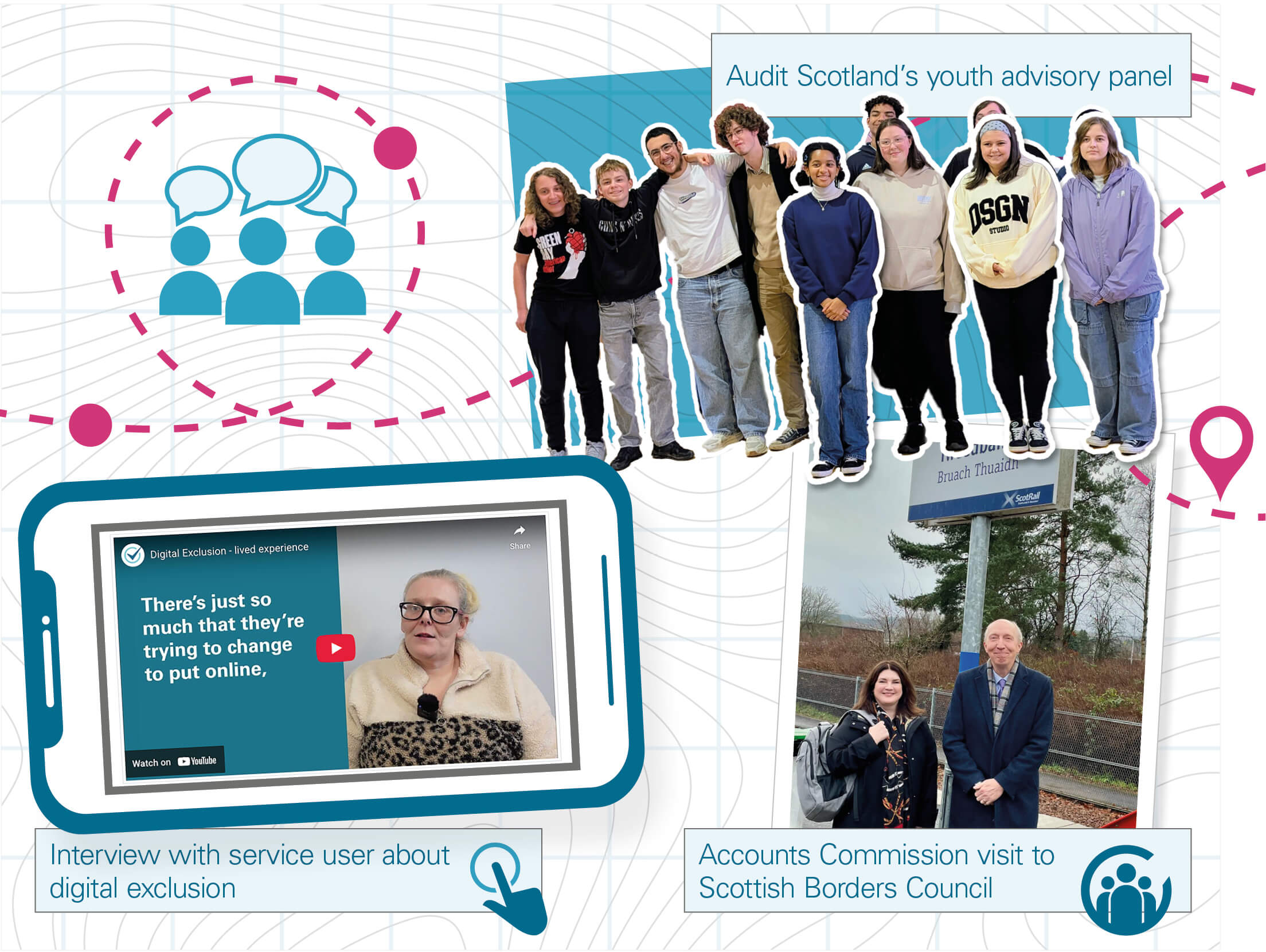
View the Digital Exclusion video in full.
Parliamentary engagement is strong and supports scrutiny
Public audit has a strong track record of supporting parliamentary scrutiny. Awareness and positive sentiment towards public audit are high among MSPs.
Our work plays a crucial role in helping the Scottish Parliament perform scrutiny, with strong examples from both annual and performance audit work of parliamentary committees holding public bodies to account due to our audit findings. There is also evidence that third-sector organisations use audit findings to support advocacy for change.
Below are examples the evaluation cites of how our audit work has supported parliamentary scrutiny.
Recommendation
The evaluation recommends we review our approach to the tools, resources and guidance that supplement our audit work, to ensure they complement the work of wider scrutiny partners, support improvement and add value.
Supporting parliamentary scrutiny
Audit work supports all four PAIS outcomes but is not balanced
More than half of the audit recommendations evaluated directly contributed to the four Public audit in Scotland outcomes.
However, nearly three quarters of these focused on two outcomes – improved financial management and transparent reporting – and fewer focussed on our outcomes looking at collaboration, resource prioritisation and service improvement.
Recommendation
The evaluation recommends we review the balance of audit recommendations against the four outcomes, and set out more clearly what ‘good’ likes for each outcome. We will also analyse conclusions across all audit work to better understand our contribution to outcomes.
Of 1,108 audit recommendations (2021/22 - 2024/25):
Conclusions and next steps
Key next steps are:
- Embed outcomes in planning: We will support colleagues to consider contribution to the four PAIS outcomes as part of audit planning
- Improve feedback: We will develop a more coordinated and comprehensive approach to obtaining, collating and reporting stakeholder feedback
- Update audit model: We will consider the relationship between public audit outcomes and the next Code of Audit Practice
- Enhance evaluation: We will strengthen our reflective practice and explore automation.
Downloads