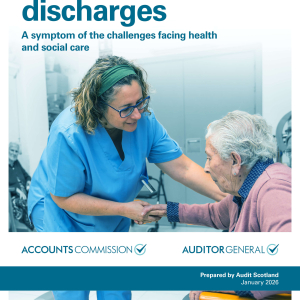
Delayed discharges, a sign of wider challenges in health and social care
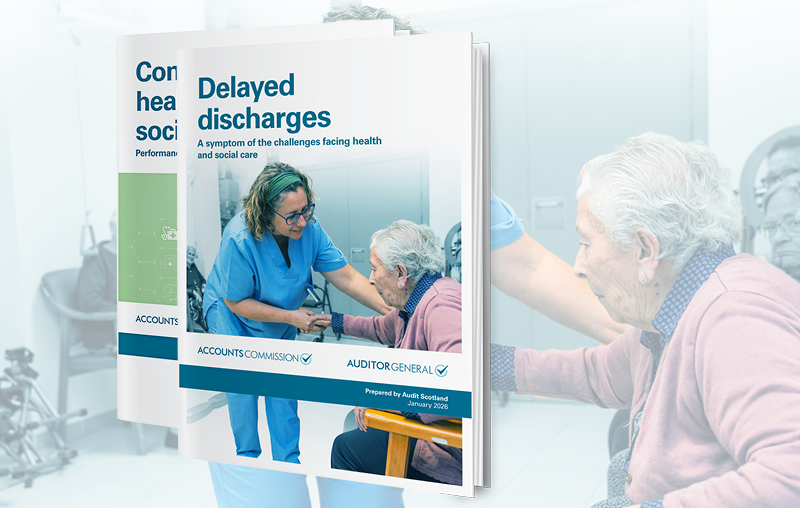
Delays in discharging patients from hospital affect people’s physical and mental health, and make it harder to admit others to hospital. Delayed discharges are a symptom of wider pressures across health and social care in Scotland.
A joint report by the Auditor General for Scotland and the Accounts Commission warns this has a significant effect, despite impacting only around three per cent of hospital patients. People medically ready to leave spent 720,000 unnecessary days in hospital in 2024/25. Whilst the full financial impact is unknown, the cost to the NHS in hospital days alone is an estimated £440 million a year.
The causes are complex, including rising demand for health and social care services, financial pressures, long-standing recruitment and retention problems across Scotland and for some, not having a Power of Attorney in place.
Reducing delayed discharges is a priority for the Scottish Government and their partners in health and social care, with significant activity underway to tackle this. But a lack of evaluation of initiatives across the country means it is difficult to measure what is having the greatest impact and whether these initiatives represent value for the money and time spent.
Stephen Boyle, Auditor General for Scotland, said:
Delayed discharges from hospital have far-reaching impacts on people’s health and well-being. The Scottish Government, health bodies, councils and other partner organisations agree on the need for major changes and are actively trying to reduce delayed discharges.
Now they must improve how they collect, analyse and use data to evaluate the initiatives underway to tackle the problem. Without this, it’s impossible to understand the impacts and costs of delayed discharges and whether the initiatives across Scotland are improving lives, services and delivering value for money.
Malcolm Bell, Member of the Accounts Commission said:
Significant change is critical across our health and social care services, shifting towards preventative care, greater use of technology and ongoing investment in the workforce. Without this, the care and support individuals need to leave hospital won’t always be available.
The Scottish Government and COSLA’s joint health and social care service renewal framework is an opportunity for progress to be made with health and social care reform. But IJBs and social care need to be at the centre of planning and decision-making on service renewal, and it's not clear how the framework will address the challenges faced by social care.